Background
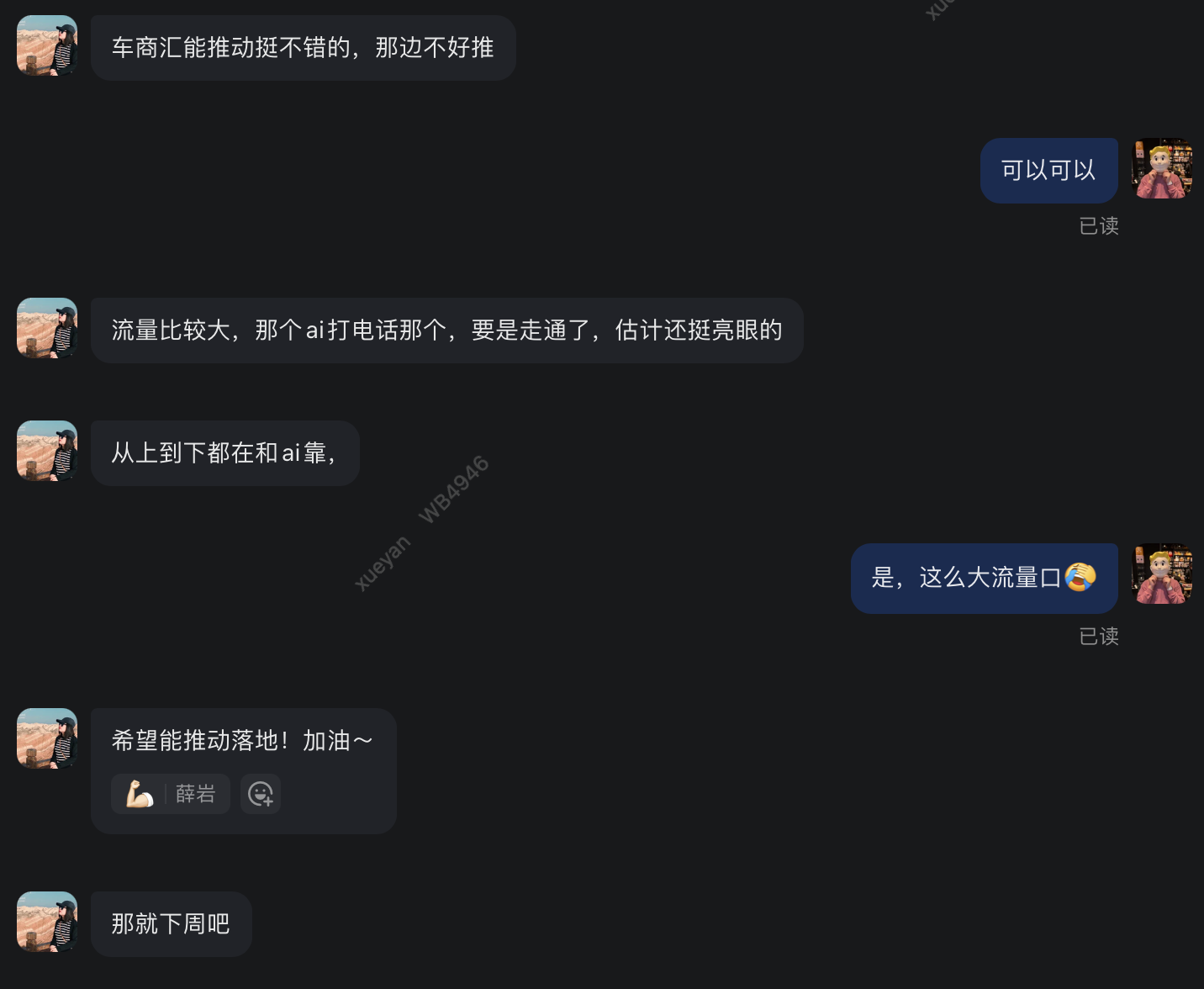
Background summary: Q3 design goal — drive fixes for critical issues already online, while exploring new ideas capable of improving business metrics.
Business scope: Dealer lead-conversion entry points, smart storefronts for contracted dealers, CPS new-car sale pages, and IM.
Optimization goal: Increase lead volume and support dealer-store renewals.
Execution strategy
For live experiences: Converge on P0 issues and drive resolution by following implementation across each business line.
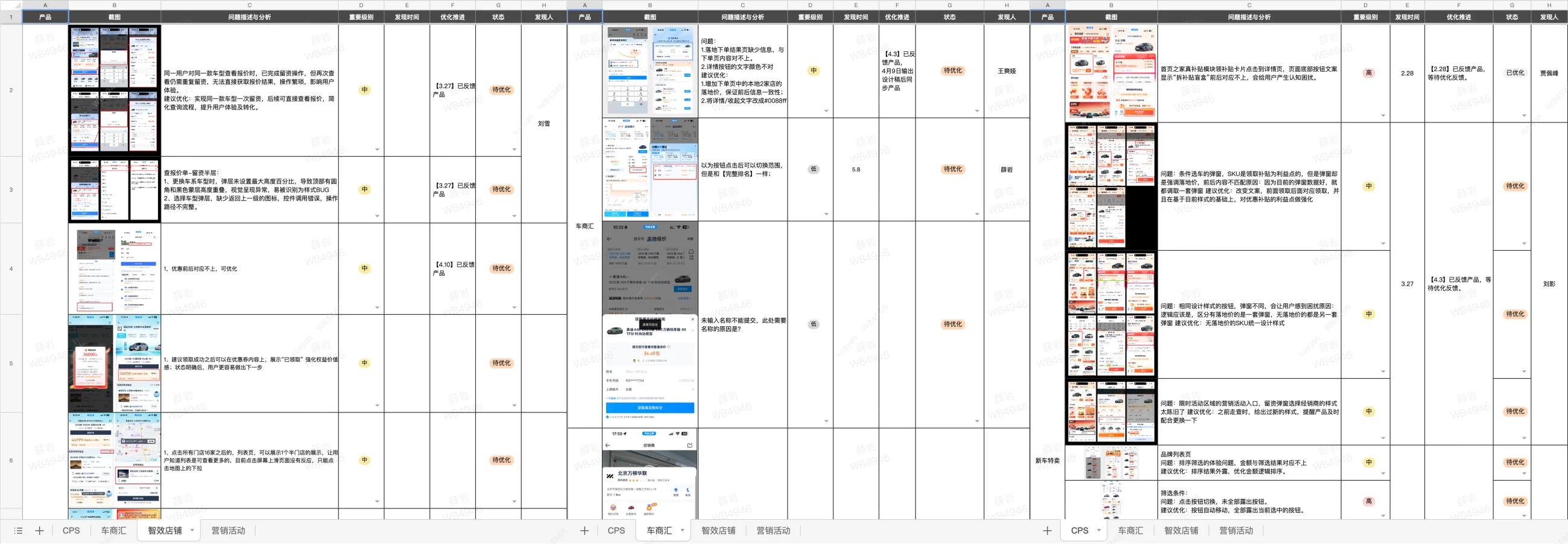
For new ideas: Map the needs and costs of users, the platform, and dealers to identify opportunities that can move business metrics.

Design exploration
We brainstormed around different user priorities and produced 12 new concepts and 5 live-experience improvements.
Many of the new concepts focused on AI improvements for Smart Storefronts, suggesting a possible comprehensive AI upgrade for Smart Storefronts.
Internal alignment feedback:
Smart Storefronts receive less page traffic than Dealer Hub, and an AI upgrade for Smart Storefronts could conflict with the platform-level AI strategy. We therefore prioritized features that could be implemented in Dealer Hub.
Initial conclusion:
Among the 12 new concepts, we selected 2 functions with relatively strong expected ROI. They share the following characteristics:
- They do not affect existing traffic entry points and are triggered only under specific conditions.
- They retain users who may otherwise leave.
- They remain relatively independent and are expected to have comparatively low implementation costs.
- They package existing business capabilities into new functions that solve real problems in the product experience.
Selected concepts
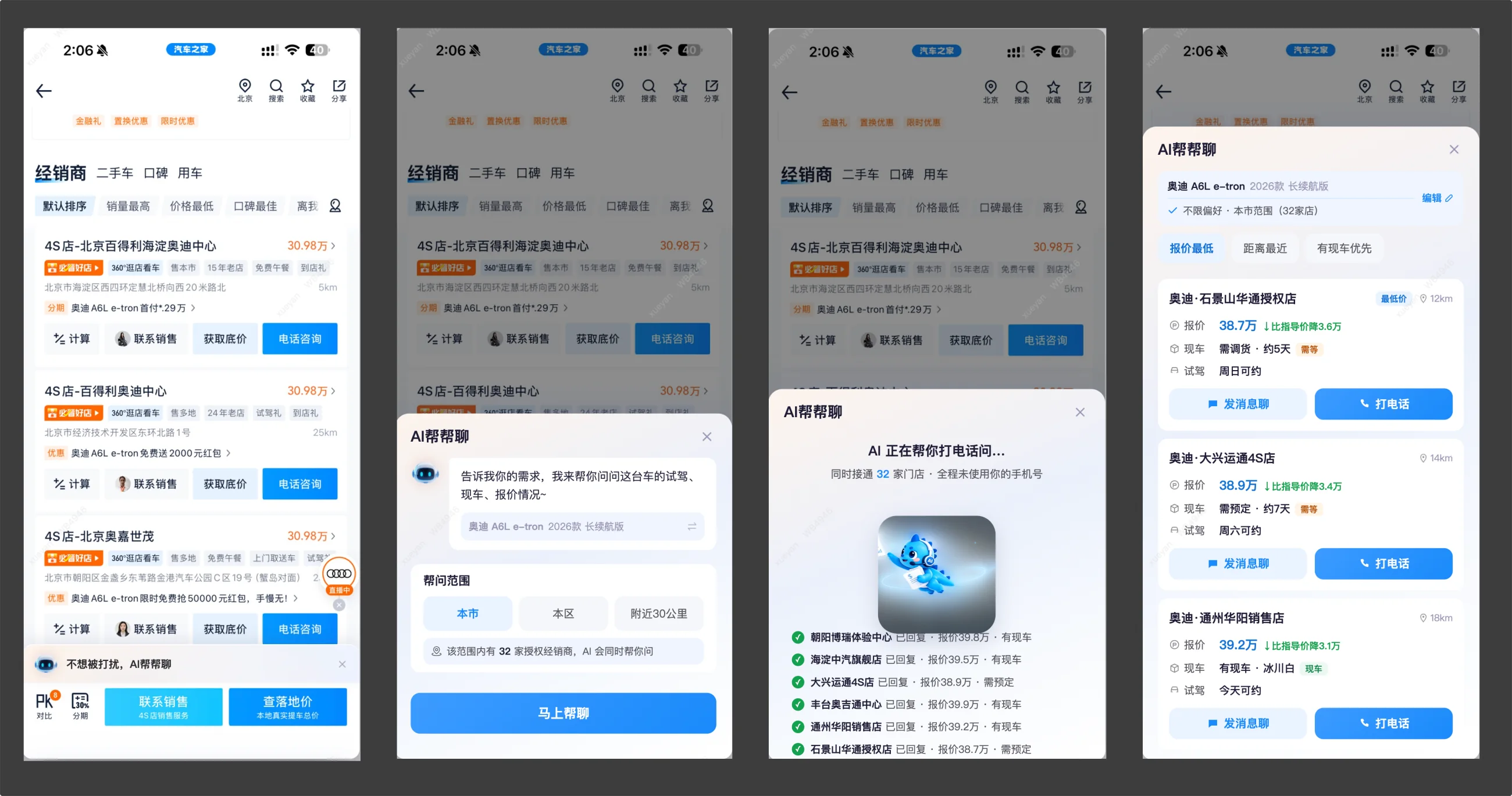
Function 1: AI-assisted inquiry
Introduction: When a user is about to leave because they fear being disturbed, AI can call dealers on their behalf and collect the information they need. After confirming that a dealer's information meets their expectations, the user can choose whether to share personal information with the dealer.
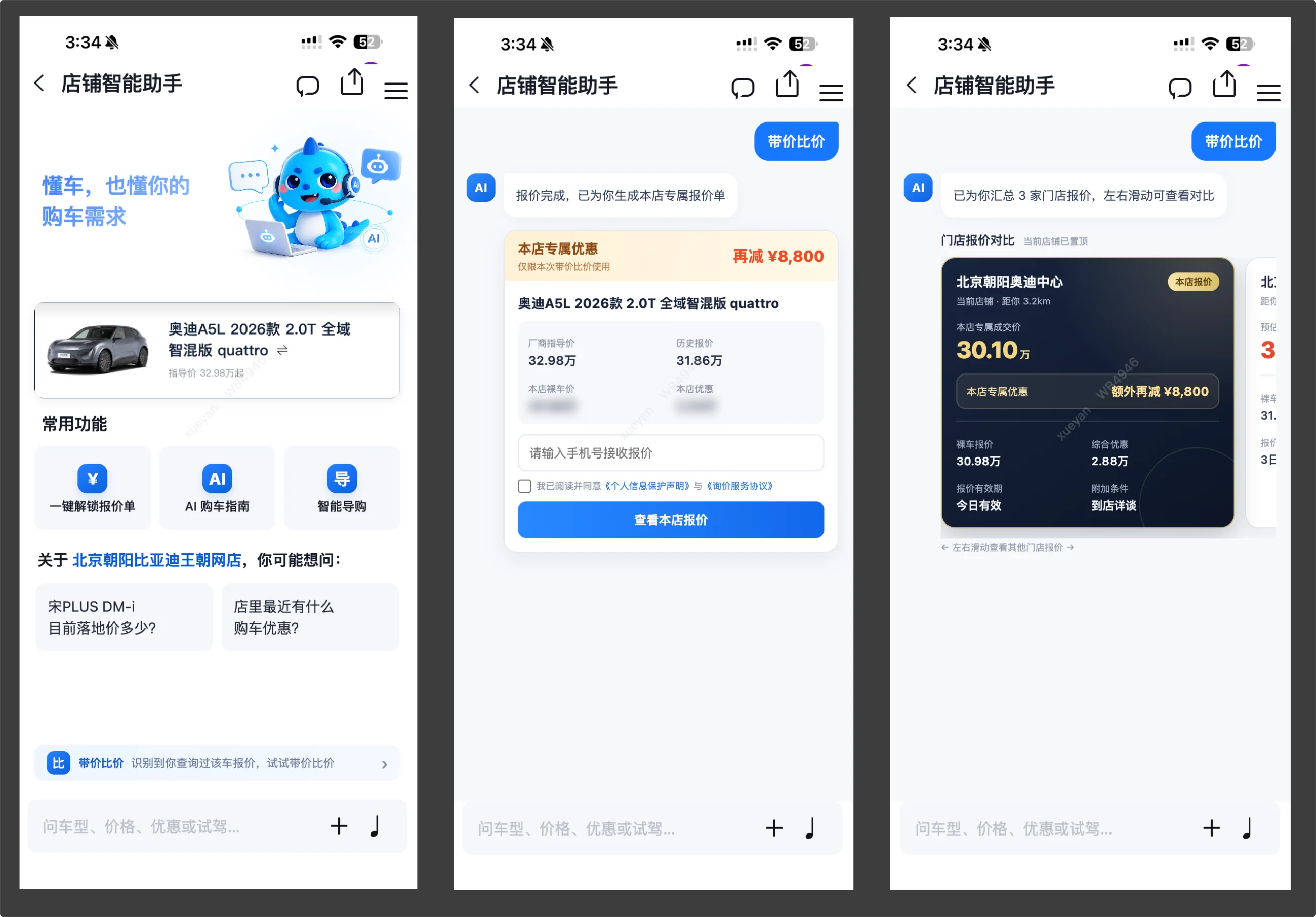
Function 2: Price comparison
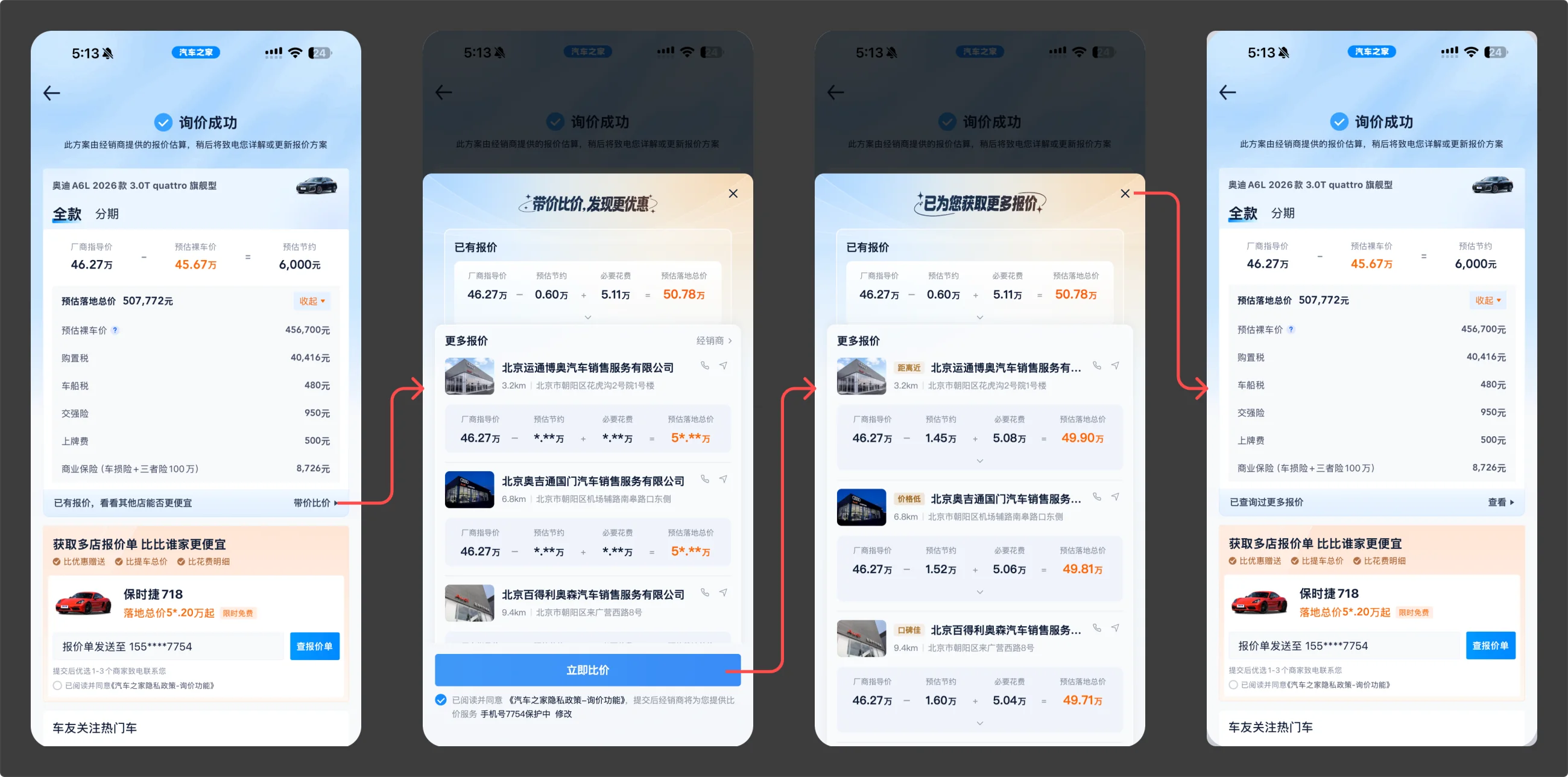
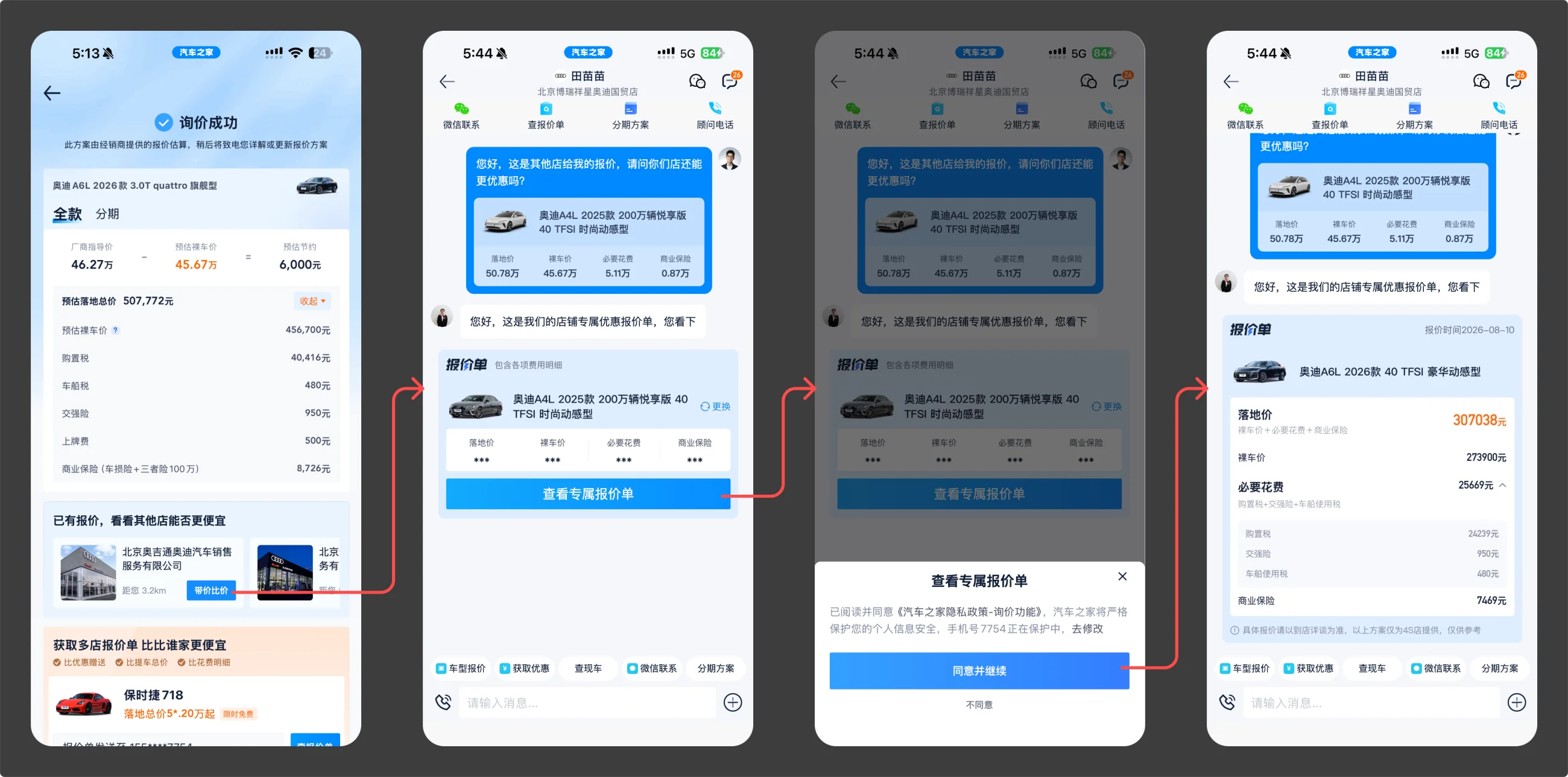
Introduction: Research showed that users on second-hand marketplaces can take Dealer A's quote to Dealer B to negotiate a lower price. We therefore considered adding a similar capability to the original quote-results page, encouraging users to compare prices and share their personal information with more dealers.
Focused iteration
AI-assisted inquiry
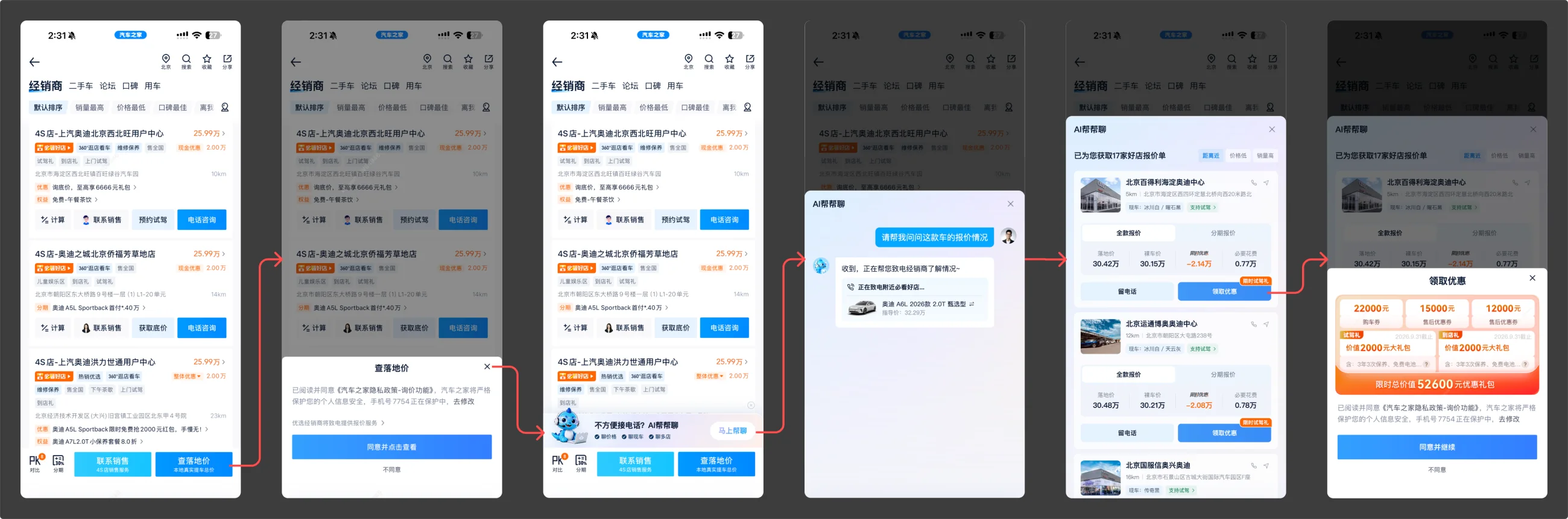
V1 · Initial flow
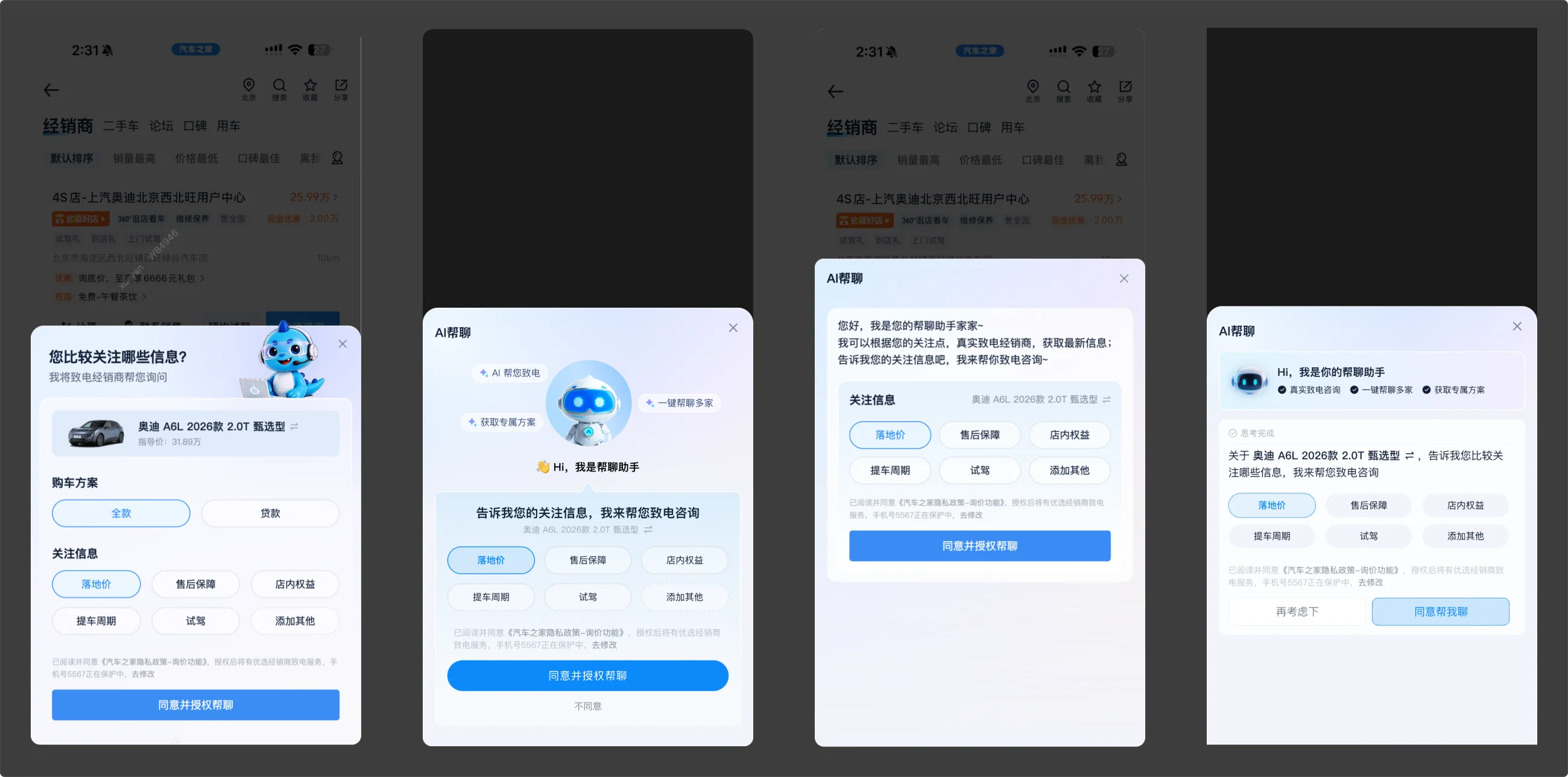
- Trigger: After the user exits the consent dialog from the inquiry button.
- Before submission: Use motion, a headline and capability tags to communicate the AI service.
- After submission: Simulate a real calling process in conversation form and recommend dealers by distance, price and sales.
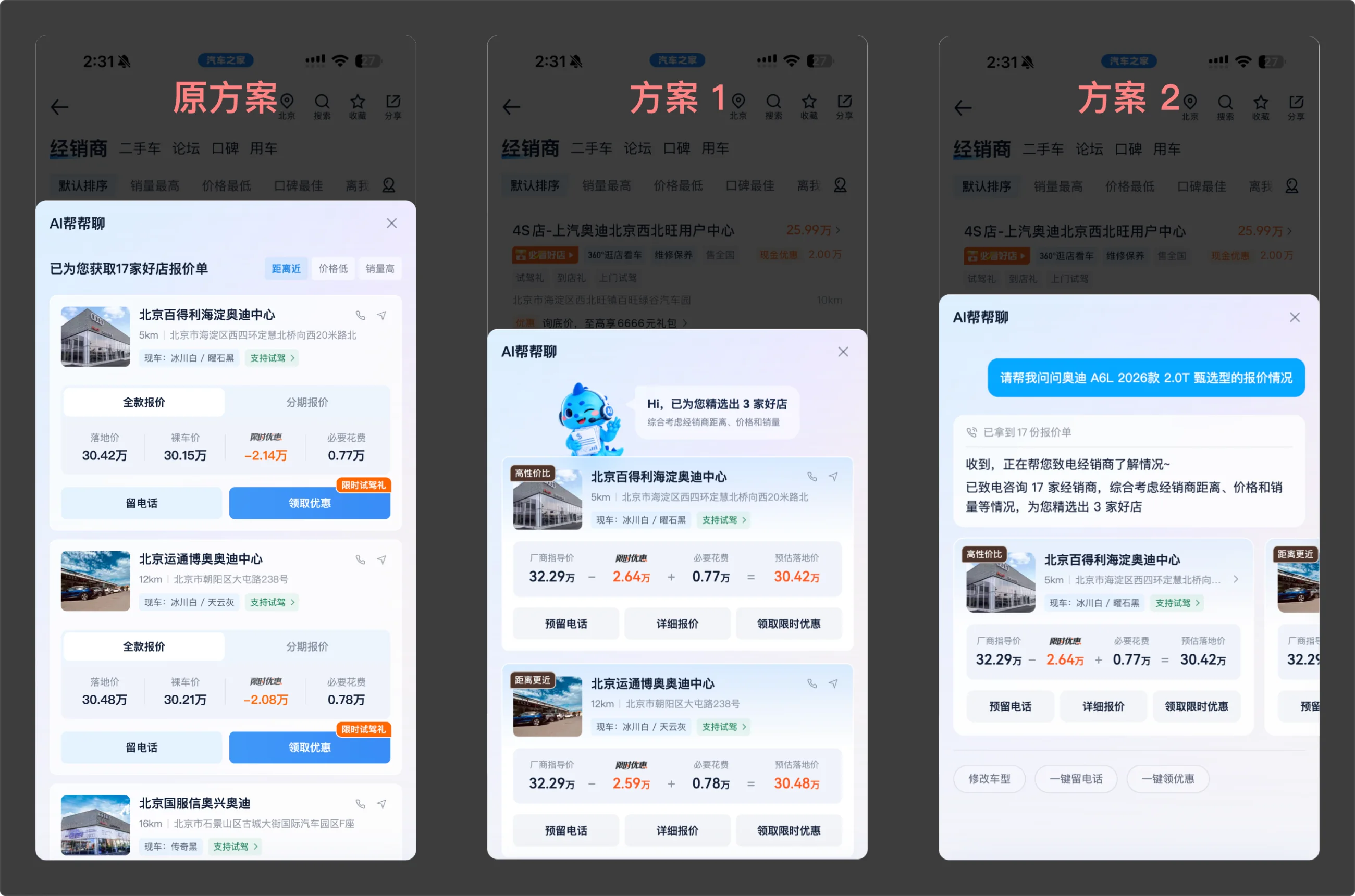
V2 · Rethink the result page
Direction 1: Combine an AI persona with a summary and concise dealer recommendations.Direction 2: Embed the summary into the conversation and expose more shortcuts. The remaining issue was weak motivation to submit contact details afterward.
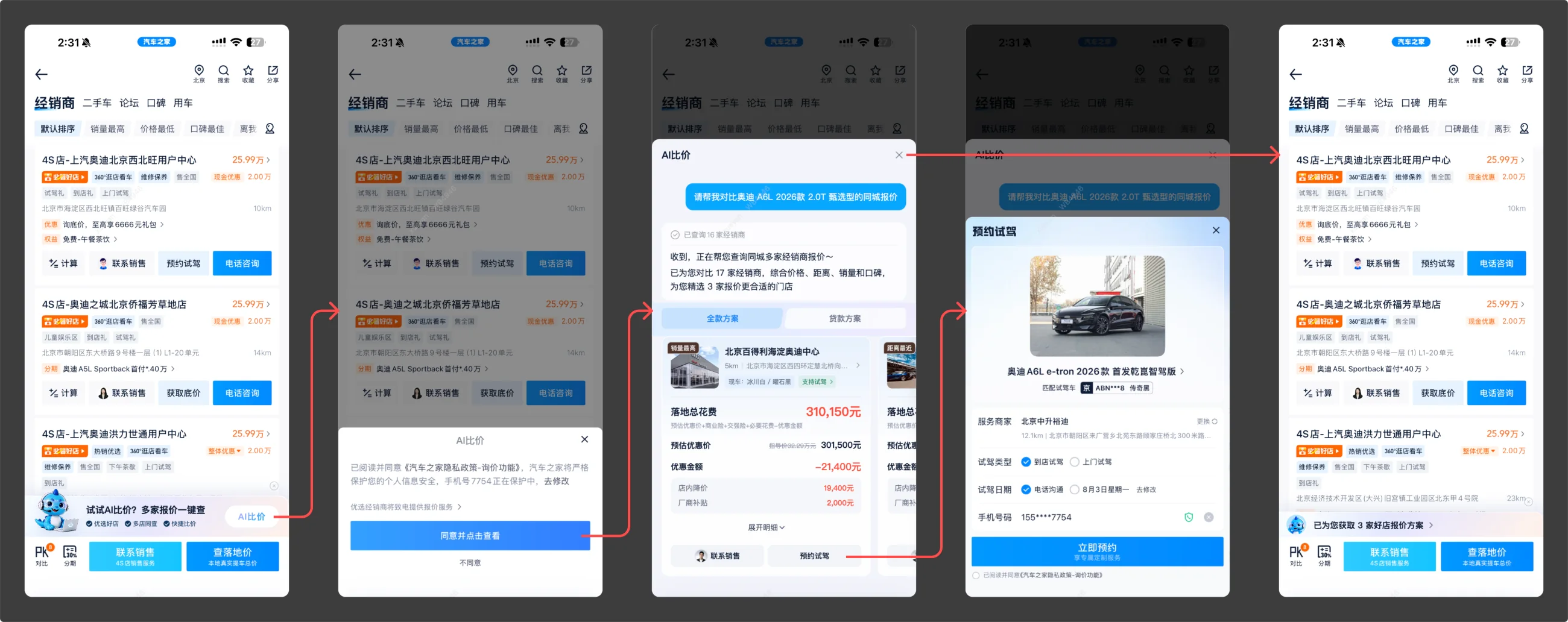
V3 · Shift the value proposition
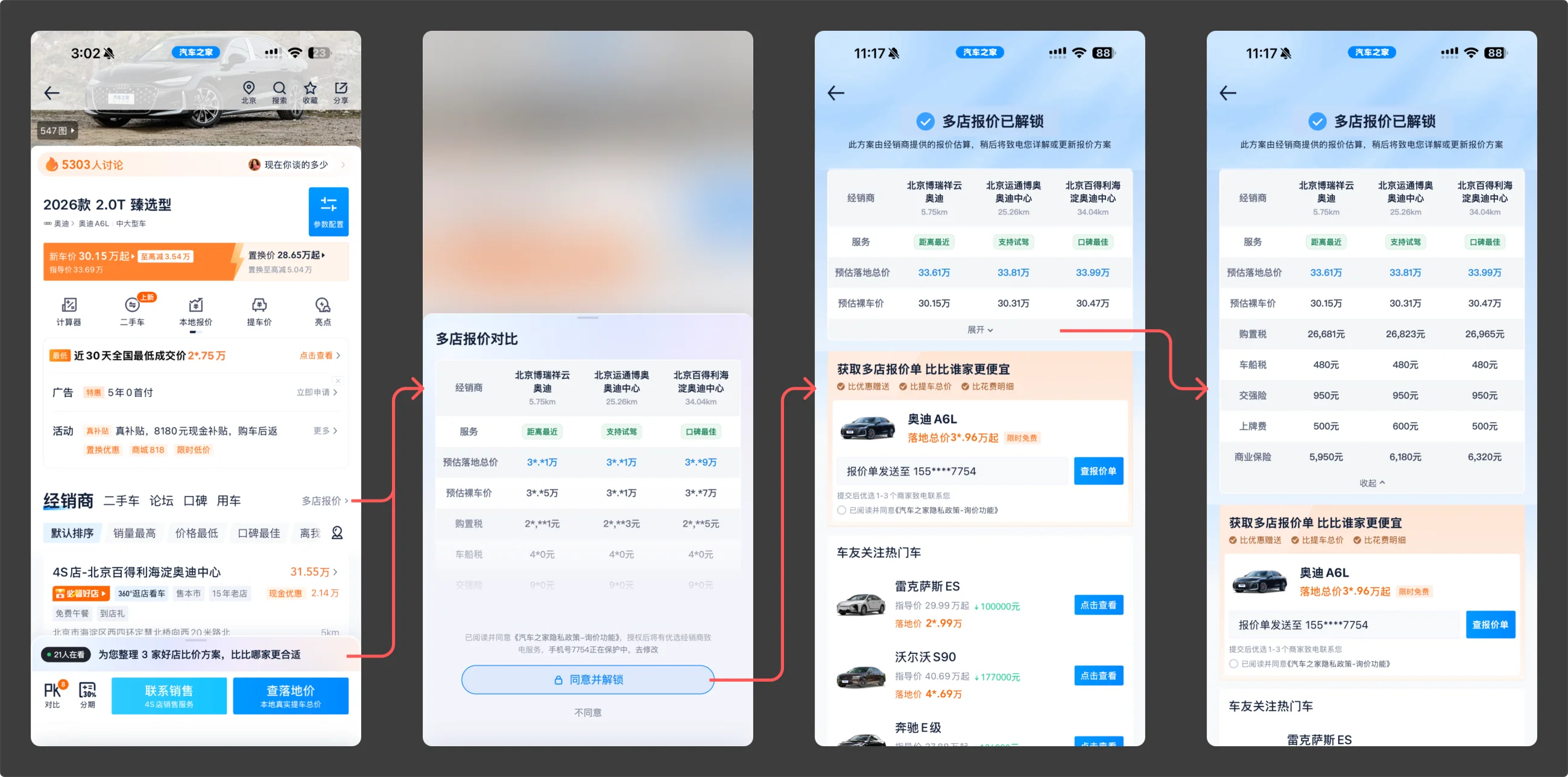
Value proposition: Shift from harassment-free inquiry to multi-store price comparison.Interaction: Retain authorization before information is shown.
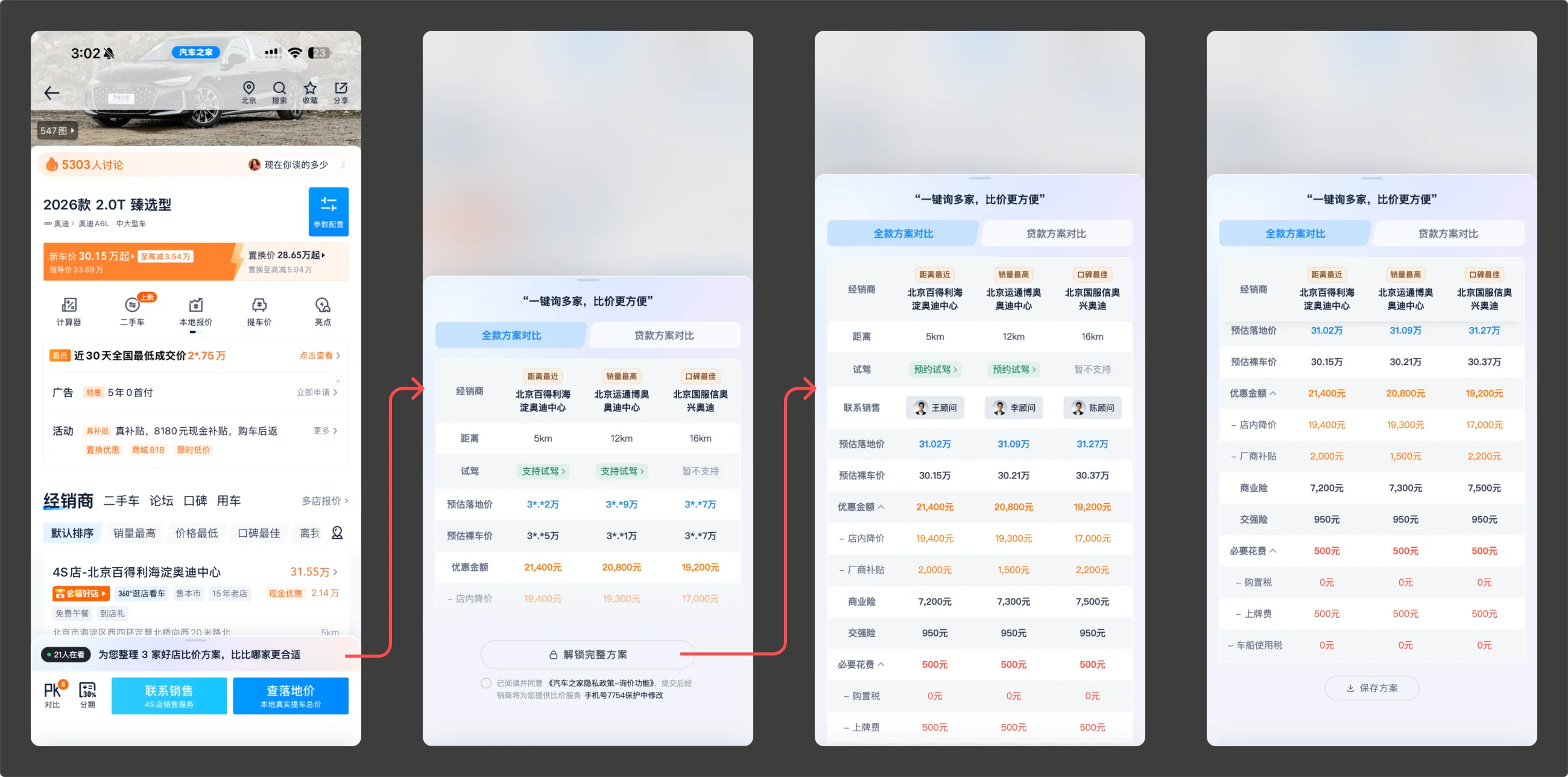
V4 · Update the interaction model
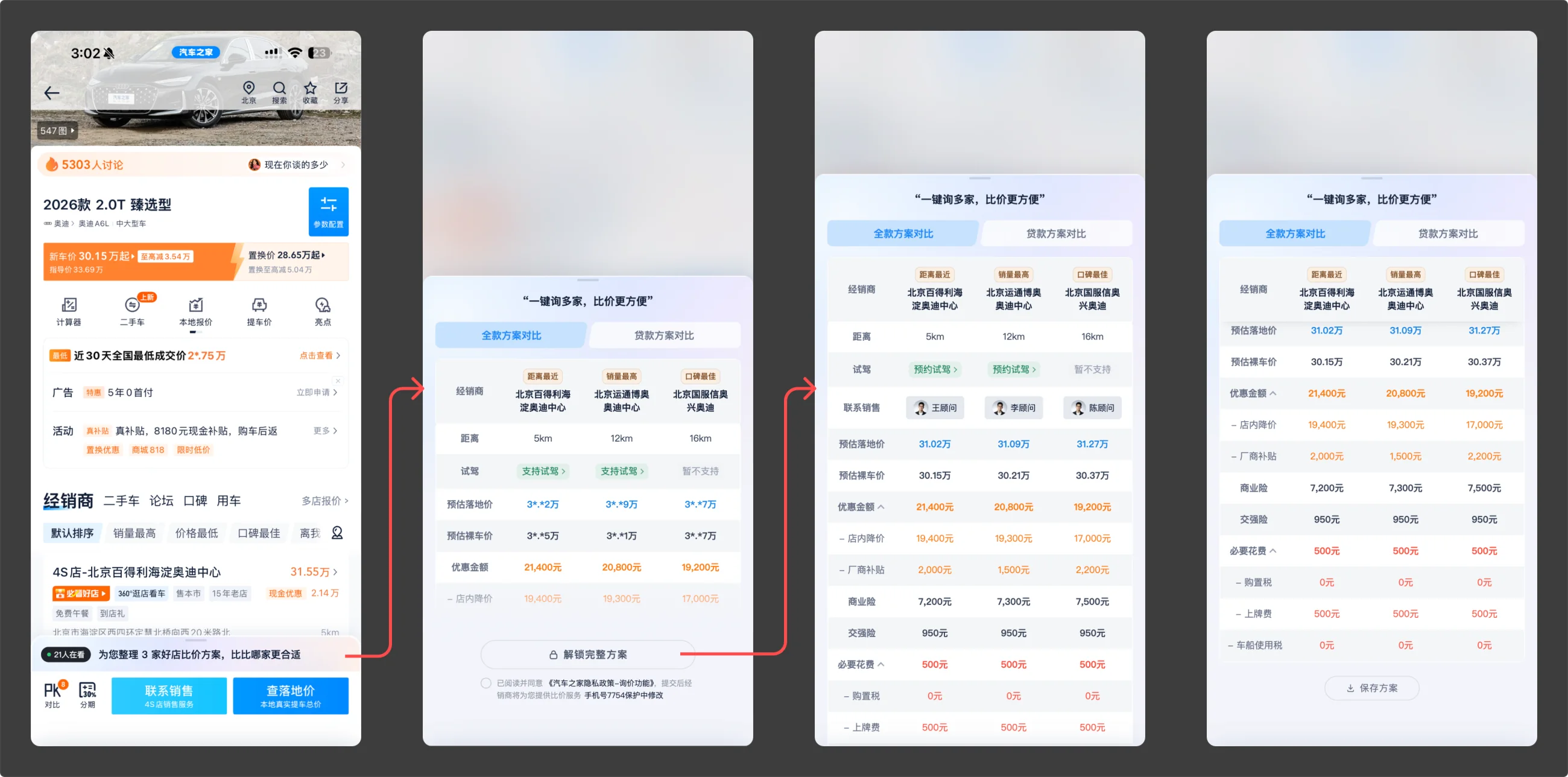
A comparison table with partially hidden information made the multi-store value tangible and created a clearer reason to unlock the complete result.
Price comparison
V1 · Initial directions
Direction 1: Use an informational entry and bottom sheet with configurable dealers.Direction 2: Expose dealer cards and move the negotiation into IM. Review showed that both began after conversion, while the higher-value opportunity was to recover users who had not converted.
V2 · Change the comparison baseline
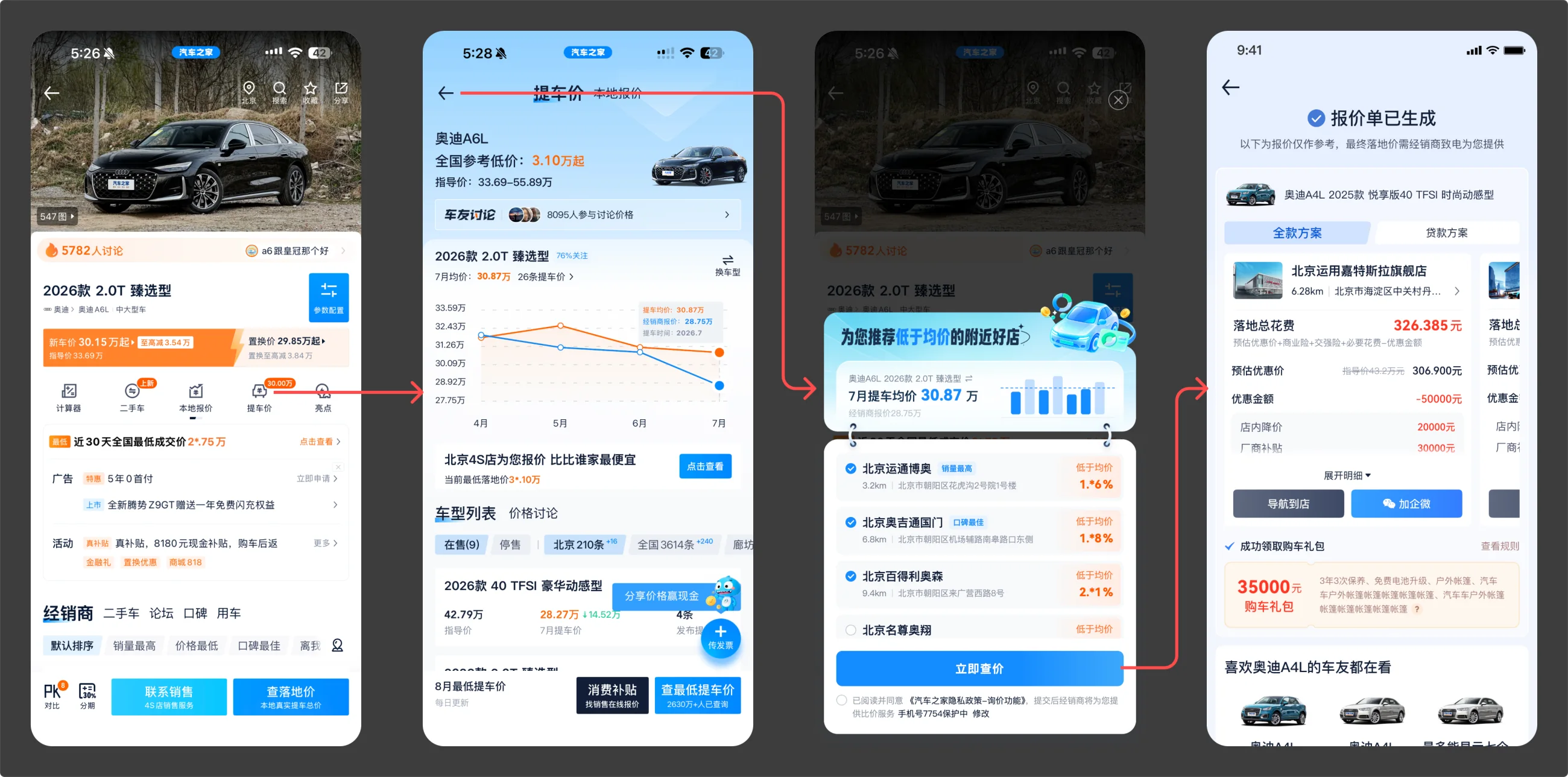
The proposal shifted to a market-average baseline, filtering dealers priced below average and using that value to motivate users to unlock the result.
Product review
AI-assisted inquiry → Multi-store comparison
Bring-a-price comparison → Below-average dealers
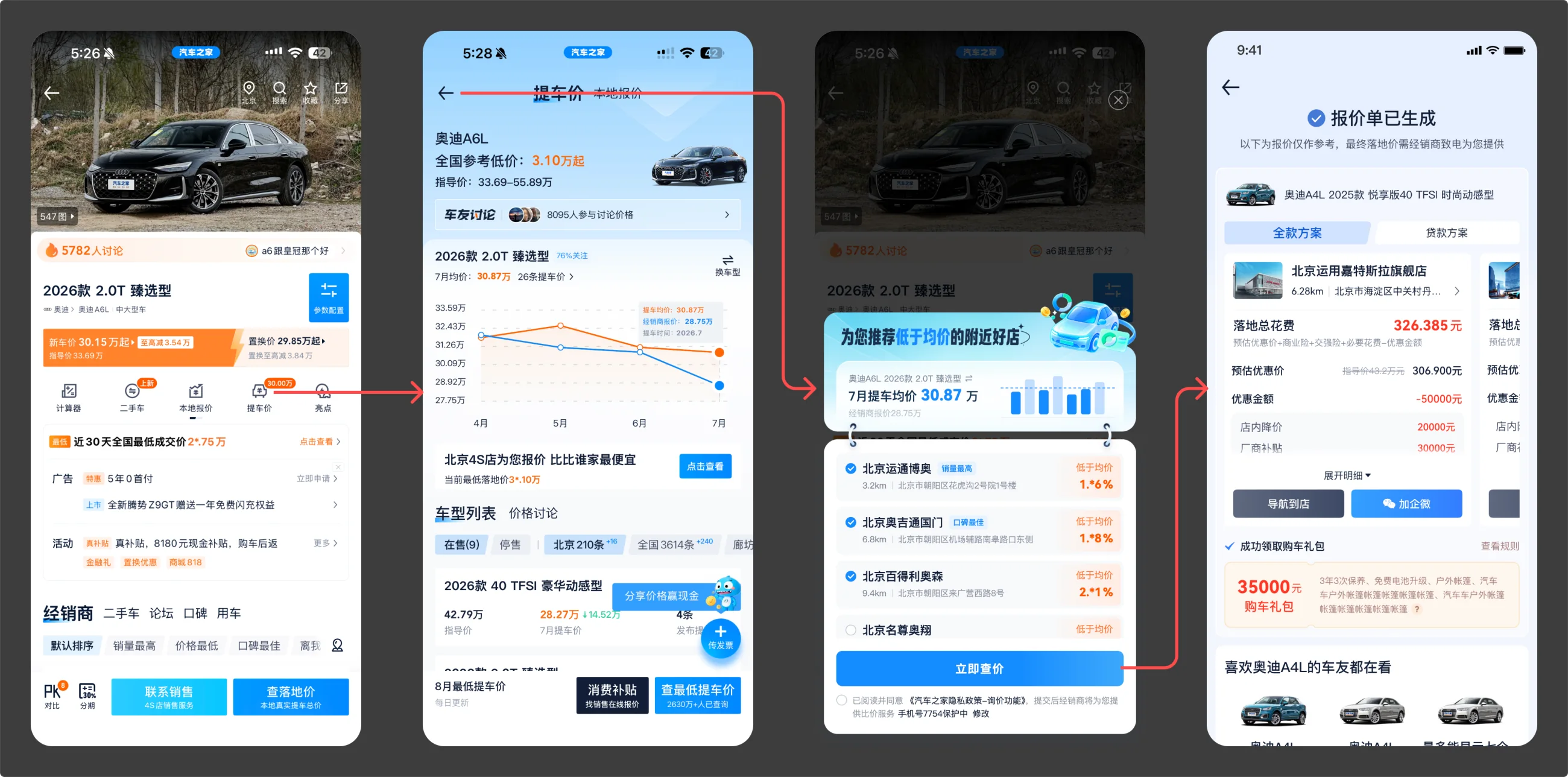
Final solution
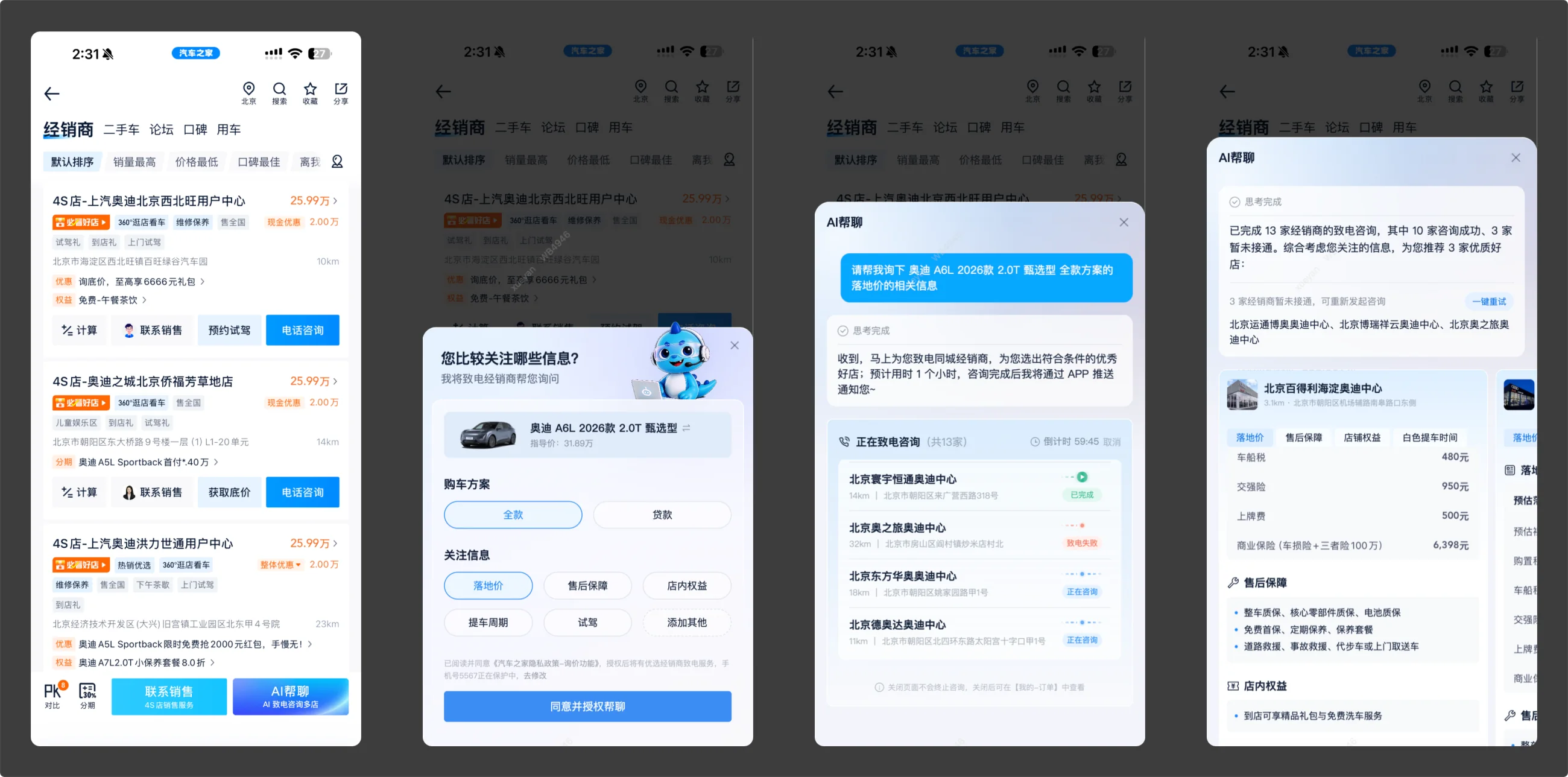
AI-assisted inquiry
- Replace the original conditional trigger with a persistent bottom entry configured by user profile.
- Reuse the existing result page and prevent negative impact on downstream conversion.

Multi-store comparison
- Add a permanent entry in addition to condition-triggered exposure.
- Reuse the existing result page while protecting conversion in the modules below.
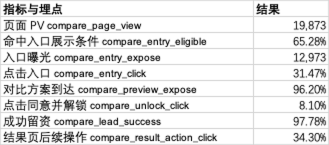
Results
AI-assisted inquiry

Multi-store comparison
Feedback